Have you ever finished a lesson and thought, “Well…that definitely did NOT go the way I planned…”
Your students were off-task. Participation was low. The energy in the room felt completely off. And no matter how many times you redirected students or tried to keep things moving, the lesson just felt…flat.
If that’s been happening lately, you’re not alone.
One of the biggest misconceptions about teaching middle school science is that the content itself should automatically be exciting enough to keep students engaged. But even though science is naturally fascinating, students can still check out if the lesson structure feels repetitive or overly passive.
The good news? Creating engaging middle school science lessons does not require a total curriculum overhaul, a Pinterest-perfect setup, or hours of extra planning every week.
Sometimes the smallest instructional shifts make the biggest difference.
By adding a little more movement, variety, and student ownership into your classroom, you can completely transform the energy of your lessons and help students connect more deeply with the content you’re already teaching.
5 Signs Your Science Lessons Might Be Falling Flat
Sometimes it’s obvious when a lesson isn’t working. Other times, students appear “quiet” or compliant, but they’re not actually engaged.
Here are a few common signs that your students may be mentally checked out during class:
There’s a big difference between a calm classroom and a disconnected classroom.
If students are staring blankly, waiting for directions to repeat, or simply going through the motions, that’s usually a sign they’re not truly invested in the learning.
Middle school students need opportunities to interact with content, discuss ideas, and actively participate.
Students Constantly Ask, “What Are We Doing?”
If students seem confused about the purpose of the activity or keep asking what they’re supposed to be doing next, the lesson may not feel meaningful or engaging to them.
Students are much more likely to participate when they understand the goal and feel involved in the process.
You know the type of assignment that gets completed in two minutes with little effort just so students can say they’re “done.”
When students are racing through work, it often means the activity lacks challenge, ownership, or genuine engagement.
Students Are Easily Distracted
If students are frequently off-task, talking about unrelated topics, or zoning out, it may not be a behavior issue at all.
Sometimes students simply need more opportunities to move, collaborate, or interact with the lesson in a different way.
Students Struggle to Explain What They Learned
This is one of the biggest indicators of them all.
If students completed the assignment but can’t explain the concept afterward, the lesson may have relied too heavily on passive learning instead of active understanding.
The Real Reason Your Lessons Feel Boring
Let me say this first: it is not because you’re a bad teacher.
It’s probably not because your students “don’t care” either.
Most of the time, lessons start feeling stale because we fall into survival-mode teaching patterns. We rely on what’s easy, familiar, or manageable during busy seasons. I’ve been there too.
But creating engaging middle school science lessons often comes down to one important thing:
How students interact with the content.
Here are a few common reasons lessons may start to feel low-energy:
Too Much Passive Learning
If students spend most of the class listening, reading independently, or completing worksheets silently, engagement naturally drops over time.
Middle school students learn best when they are doing something with the content.
Not Enough Variety
Even great activities can lose their excitement if they’re used every single day.
Students thrive on novelty and variety. Rotating instructional strategies helps keep students interested and motivated.
Lack of Student Ownership
When students have no voice or choice in their learning, lessons can quickly start to feel like something being done to them instead of with them.
Ownership creates investment.
Over-Reliance on One Resource
Textbooks and slides absolutely have their place, but if every lesson follows the same format, students begin to predict the routine and disengage.
The goal is not to reinvent your classroom every day. It’s simply to create more opportunities for interaction and participation.
The Good News? These Are Easy Problems to Fix
When teachers tell me their lessons feel flat, they often assume they need to find an entirely new curriculum, create elaborate projects, or spend hours searching for fresh activities.
But that’s usually not the case.
More often than not, engagement problems can be traced back to a few simple classroom routines that have become a little too predictable. And the solution isn’t doing more. It’s making a few intentional changes to how students experience the content.
The three strategies below are some of my favorite ways to increase engagement because they’re easy to implement, work with almost any science topic, and don’t require a ton of extra prep.
Fix #1: Add More Variety Without Adding More Planning
One of the easiest ways to improve engagement is to vary how students experience the content.
The best part? You do not need to create elaborate lessons from scratch.
In fact, many engaging middle school science lessons are built from simple instructional strategies that can be reused again and again.
Here are a few easy ways to add more variety to your classroom:
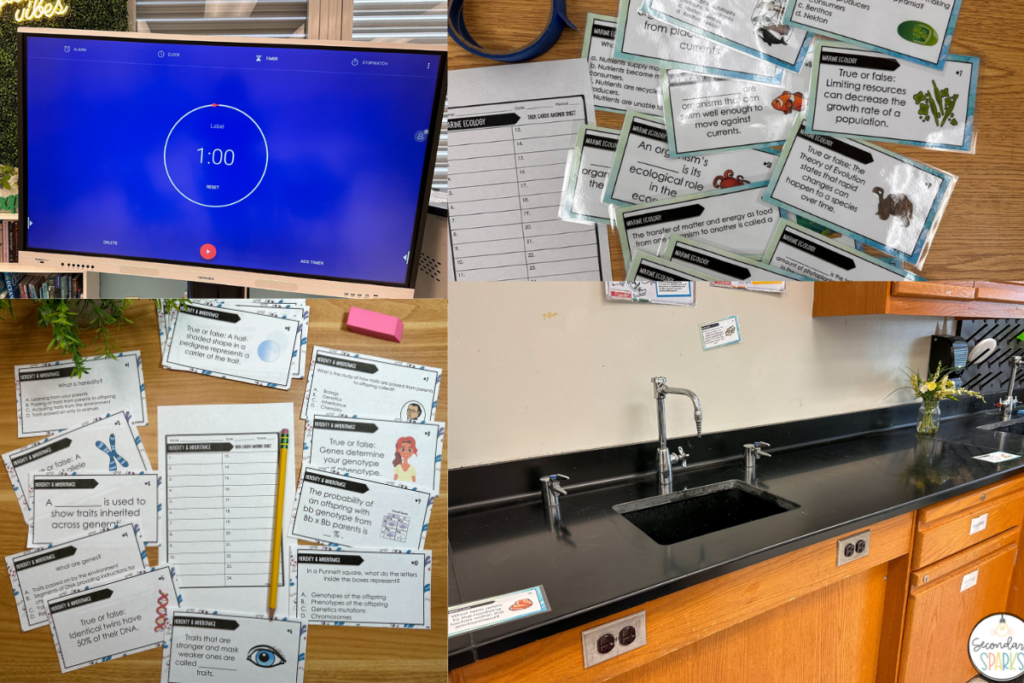
Science stations naturally keep students engaged because they break learning into smaller chunks and allow students to move around the room while interacting with content in different ways.
You can include:
reading stations
task cards
short videos
hands-on activities
review games
teacher-led small groups
Even simple station rotations can completely change the energy of your classroom.
Incorporate Quick Demos
You don’t always need a full lab to make science exciting.
Sometimes a short, attention-grabbing demonstration at the beginning of class is enough to spark curiosity and increase participation throughout the lesson.
Middle school students love moments that make them say, “Wait… what just happened?”
Use More Discussion Opportunities
Students need opportunities to talk through their thinking.
Try incorporating:
turn-and-talks
partner discussions
small group collaboration
debate-style questions
claim/evidence reasoning discussions
The more students verbally process ideas, the deeper their understanding becomes.
Add Educational Review Games
Review games are always a win in middle school science.
Even something as simple as a partner sort activity or collaborative problem-solving task can help increase engagement and accountability.
Escape Rooms
Science escape rooms are always a hit.
They encourage teamwork, critical thinking, movement, and problem-solving all at once. Plus, students become incredibly invested in completing the challenge.
The engagement level during an escape room is usually unmatched.
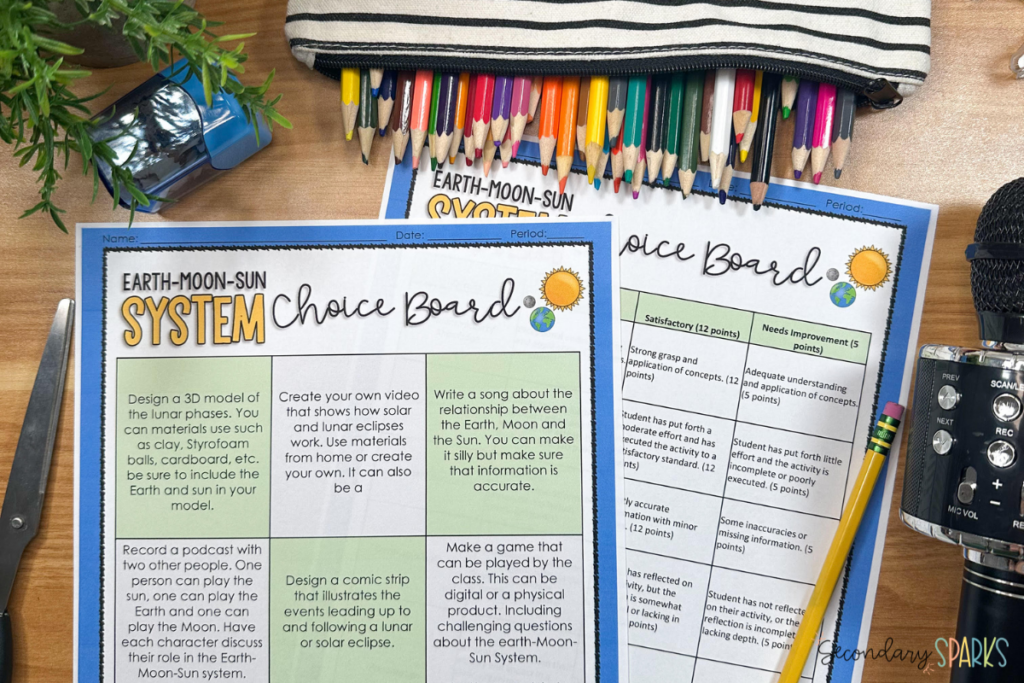
Fix #3: Give Students More Choice
Choice creates ownership and ownership creates engagement.
When students feel like they have some control over their learning experience, participation naturally increases.
This does not mean you need to offer unlimited freedom or create ten different assignments every week.
If your classroom has been feeling low-energy lately, don’t panic.
You don’t need to throw out your curriculum or completely reinvent your teaching style overnight.
Start small.
Add one new discussion strategy. Try a gallery walk. Incorporate a review game. Give students a little more movement or choice during class.
Those small shifts can completely change the feel of your classroom over time.
The truth is, engaging middle school science lessons are not about being entertaining every second of the day. They’re about creating opportunities for students to actively connect with the content in meaningful ways.
And when students are actively involved in learning, everything changes.

Leave a Reply