Here’s a hot take: Classroom management strategies for middle school science don’t always have to include keeping your students completely quiet. In fact, a quiet science classroom isn’t automatically the most effective science classroom.
Of course, there are times when I need silence. When I’m giving important directions, explaining a new concept, reviewing lab safety, or preparing students for an assessment, I need their attention.
But the rest of the time? I actually want to hear my students talking.
I want them asking questions, comparing observations, debating answers, troubleshooting experiments, and sharing ideas with their classmates. That’s what science sounds like!
If you’re searching for classroom management strategies for middle school, you might be picturing a perfectly quiet room where every student is working independently. However, I think we need to rethink what a well-managed science classroom actually sounds like.
I like to call it structured chaos.
My classroom might be busy. Students might be moving between stations, discussing their lab results, or disagreeing about an answer. But there’s a purpose behind the activity. Students know what they’re doing, why they’re doing it, and what I expect from them.
That’s the kind of classroom I’m working toward.
A Quiet Classroom and a Well-Managed Classroom Aren't the Same Thing
Especially when you’re a newer teacher, it’s easy to associate good classroom management with students sitting quietly and following directions.
I get it. A quiet room can feel like you’re in control. However, not all classroom noise is created equal.
There’s a big difference between off-task noise and productive noise. Off-task noise might sound like unrelated conversations, students yelling across the room, or groups distracting each other. Productive noise sounds a little different.
It’s students asking questions, comparing answers, explaining their thinking, and working through a problem together.
Good classroom management isn’t about eliminating noise. It’s about helping students understand what appropriate noise looks and sounds like in different situations.
And in science, there’s a lot worth talking about!
Science Should Give Students Something to Talk About
Think about the conversations you want to hear during a science lesson:
- “Why did that happen?”
- “Our group got a different result.”
- “I think the answer is ___ because…”
- “What if we changed this variable?”
- “Can we try it this way?”
Those conversations are signs that students are thinking, questioning, and making connections.
Instead of jumping in with an answer every time a student raises their hand, try turning the question back to them. Ask, “What do you think?” or “Talk to your group about it.” You might also ask, “How could you test that?”
These little shifts give students more ownership of their learning. They also take some pressure off you to be the person with every answer.
I Want My Students Doing More of the Work Than I Am
One thing I’ve learned about teaching science is that I don’t need to be at the front of the room explaining everything.
My role changes throughout a lesson. Sometimes I’m explicitly teaching a concept or modeling a new skill. Other times, I’m circulating, listening to conversations, asking questions, and redirecting students when needed.
Most importantly, I’m giving students time to wrestle with the content themselves.
It’s tempting to jump in when a group gets stuck. However, those moments are often where some of the best learning happens.
If I’m doing all the talking, I’m probably doing all the thinking, too. I want my students to do more of both!
How to Build Collaboration Into Your Middle School Science Classroom
Science naturally lends itself to collaboration. There are so many ways to get students working together without sacrificing structure.
For example, I love incorporating:
- Science stations: Students rotate through different activities, experiments, or learning tasks.
- Labs and investigations: Partners work together to follow procedures, collect data, and make observations.
- Task cards: Small groups work through questions, challenges, or application activities at their own pace.
- CER activities: Students develop claims, identify evidence, and explain their reasoning.
- Small-group problem solving: Students compare strategies and work through challenging concepts.
- Guided notes: Students follow along with instruction and pause for partner discussions or quick checkpoints.
The important thing is that collaboration doesn’t mean throwing students into groups and hoping for the best.
Students need clear expectations. They should know how to share materials, take turns, contribute ideas, and ask for help.
Additionally, give them a specific goal to work toward. When students know what they’re trying to accomplish, group work becomes much more productive.
My Favorite Question During a Science Lab: "Can We Try This?"
One of my favorite moments in my science classroom happens when a student looks up during an investigation and asks:
“Mrs. Rudolph, can we try ___ and see what happens?”
YES. Absolutely!
As long as it’s safe and appropriate for the investigation, I love these questions.
Why? Because the student isn’t simply following directions anymore. They’re thinking like a scientist.
They’re making predictions, considering variables, and wondering what might happen if they change something.
Of course, not every experiment needs an additional investigation. We still have learning objectives, procedures, and time constraints to consider.
However, I never want students to think there’s only one acceptable way to be curious about science. Sometimes the best learning moments happen when students start asking questions we didn’t plan for.
Classroom Management Strategies for Middle School That Make Room for Structured Chaos
So, how do you create a classroom where students have room to explore without things getting completely out of hand? One of the most effective classroom management strategies for middle school science is creating clear expectations that give students room to explore.
I want students to have opportunities to move, collaborate, experiment, and make decisions. Those opportunities work best when everyone understands the expectations.
Here are a few classroom management strategies for middle school science that help make it happen:
1. Set expectations before the activity begins.
Explain what productive collaboration should look and sound like. Talk about voice levels, movement, materials, and what students should do when they finish.
2. Give directions before materials come out.
This one makes a HUGE difference during labs. Once students have goggles, beakers, and other materials in front of them, getting their attention becomes much harder.
3. Circulate constantly
Don’t stay at your desk while students work. Walk around, listen to conversations, check progress, and redirect small behaviors before they become bigger distractions.
4. Ask questions instead of giving immediate answers
When students get stuck, help them think through the problem. A good question can move their learning forward without taking away the opportunity to figure something out.
5. Build strong routines
Students should know how to transition between activities, collect supplies, clean up, and ask for help. The more familiar these routines become, the less time you spend explaining them.
6. Know when to stop and reset
Sometimes productive noise turns into regular chaos. That’s okay! Pause the activity, bring everyone back together, and revisit expectations before moving forward.
Structure doesn’t take away student freedom. It actually makes more of it possible.
What I Listen for While Students Are Working
When I’m circulating around the classroom, I’m not just checking whether students are completing their assignments. I’m listening to their conversations.
Are they using science vocabulary? Are they explaining WHY they chose an answer? Are they disagreeing with each other respectfully?
I’m also listening for students noticing patterns, asking questions, and connecting their observations to something we learned earlier. One of my favorite things to hear is a student helping a classmate understand an idea instead of simply giving them the answer. These conversations tell me so much about what students understand and where they might need additional support.
Additionally, listening gives me a chance to catch misconceptions before they become bigger problems. I can adjust my instruction, ask a follow-up question, or bring the class together for a quick discussion.
Sometimes the most valuable assessment happening in my classroom isn’t on paper. It’s happening in the conversations around me.
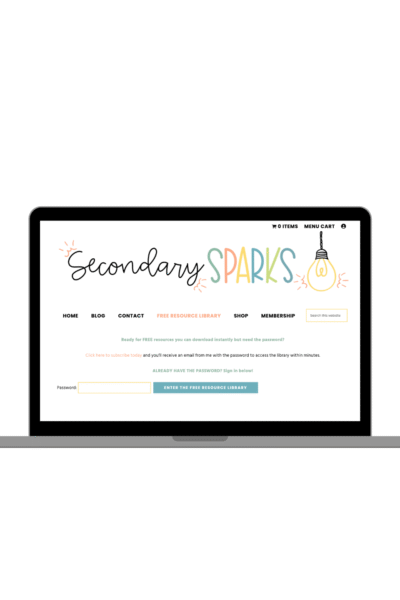
Looking for Collaborative Middle School Science Activities?
You don't need to reinvent your entire science curriculum to create more opportunities for student collaboration.
You'll find free middle school science resources ready to bring into your classroom and give students something to think about and talk through.
Because sometimes, a little noise is exactly what learning should sound like!
Explore the Free LibraryYou Don't Need a Silent Classroom to Have Classroom Management
Here’s what I want newer science teachers to remember: You can have a well-managed classroom without having a silent one. Some of the best classroom management strategies for middle school science don’t involve making students sit quietly or work independently.
Your students can be engaged and noisy. They can collaborate and still follow expectations. They can move around the room, ask questions, and explore new ideas without losing sight of the learning goals.
Of course, there will be moments when silence is necessary. Students need to know when it’s time to listen, focus, and follow directions.
However, those moments don’t have to define your entire classroom environment.
Middle school students have so much curiosity and energy. Our job isn’t to eliminate those things. It’s to create an environment where they can put that energy toward meaningful learning.
A little structured chaos? I’ll take it!
Leave a Reply