Description
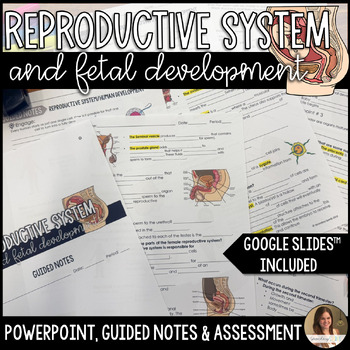
This human reproductive system lesson is perfect for middle school science! Do you need a resource to introduce reproductive system and fetal development to your biology class that covers basic anatomy and physiology of the human reproductive system and the process of human development? This resource contains a PowerPoint lesson with Cornell notes style guided notes and an assessment that all tie together.
Created specifically for Florida Biology Standard SC.912.L.16.13 Describe the basic anatomy and physiology of the human reproductive system. Describe the process of human development from fertilization to birth and major changes that occur in each trimester of pregnancy.
This resource is excellent for traditional and digital interactive science notebooks. The PowerPoint and guided notes are also included in Google Slides which make this a perfect digital resource for online learning! There is also a self-grading Google Forms assessment. This is a no prep resource!
The PowerPoint Lesson and guided notes are broken up into 4 different parts:
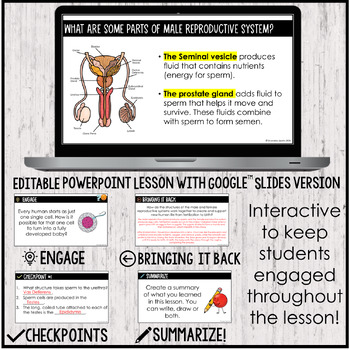
❔ Engage: This is a question that is used to get students thinking and engaged before the lesson begins. They answer the question in their guided notes.
☑ Checkpoints: These are questions throughout the lesson that assess what students are learning as they go through. The student’s answer these questions in their guided notes. Answer key is included in the PowerPoint.
↵ Bringing it Back: This final question wraps up the lesson by tying student’s new knowledge with the engagement piece.
✐Summarize! Students can summarize their learning by writing, drawing or both.
All links for the Google Slides and Google Forms are included in the resource.
The PowerPoint is editable. The titles, images and clip art are not editable.
Guided Notes:
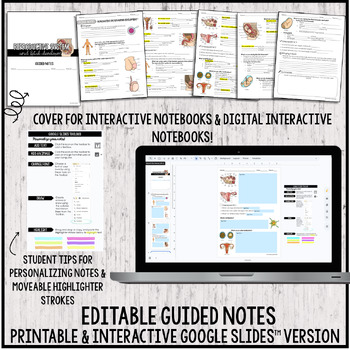
The Cornell style guided notes follow along with the lesson. This allows the students to go through the lesson with the class as the teacher goes through the slides or they can fill it out independently if they are using the PowerPoint digitally. All the text aside from the title and cover page are editable.
Includes two cover pages for interactive notebook booklets. One in color and one in black and white.
The Google Slides version of the notes includes text boxes for students to add in their own text. A Google Slides “toolbox” is included for students to reference to for changing fonts, adding images, drawings, etc. There are even drag and drop highlighter marks for students to make their notes more interactive.
*There is an included answer key for the guided notes to be easily printed and added to a teacher’s copy of an interactive science notebook.
Assessment:
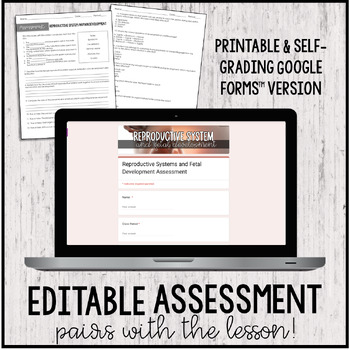
The assessment contains 20 questions with a mix of vocabulary matching, short answer and multiple choice questions. An answer key is included. Everything is editable except for the title and any included clip art lip art.
A Google Slides version is included as well as a self-grading Google Forms version. The links are included in the resource.
Content covered:
⭐Role of the male reproductive system
⭐Parts of the male reproductive system (testes, scrotum, epididymis, vas deferens, seminal vesicle, prostate gland, urethra, penis)
⭐Parts of the female reproductive system ( cervix, vagina, ovaries, oviduct (fallopian tube, uterus)
⭐What occurs after fertilization (morula, blastocyst, implantation)
⭐Support structures for pregnancy (placenta, umbilical cord, amniotic sac)
⭐Milestones during each trimester
*Each resource is in PDF and PowerPoint format for easy editing.
Related Resources:
- Human Brain Anatomy Lesson Guided Notes & Quiz – Editable & Google – SC.912.L.14
- Factors Affecting Blood Flow Lesson Notes & Assessment – Biology SC.912.L.14.36
- Human Body Systems Stations Activities
- Human Body Systems Choice Board
- Human Body Systems Task Cards – Editable and Google Forms™
- Human Body Systems Warm Ups or Exit Tickets – Editable and Google Slides™
Related Blog Post: 8 Activities to add to your Human Body Systems Lesson Plans
Reviews
There are no reviews yet.