Description
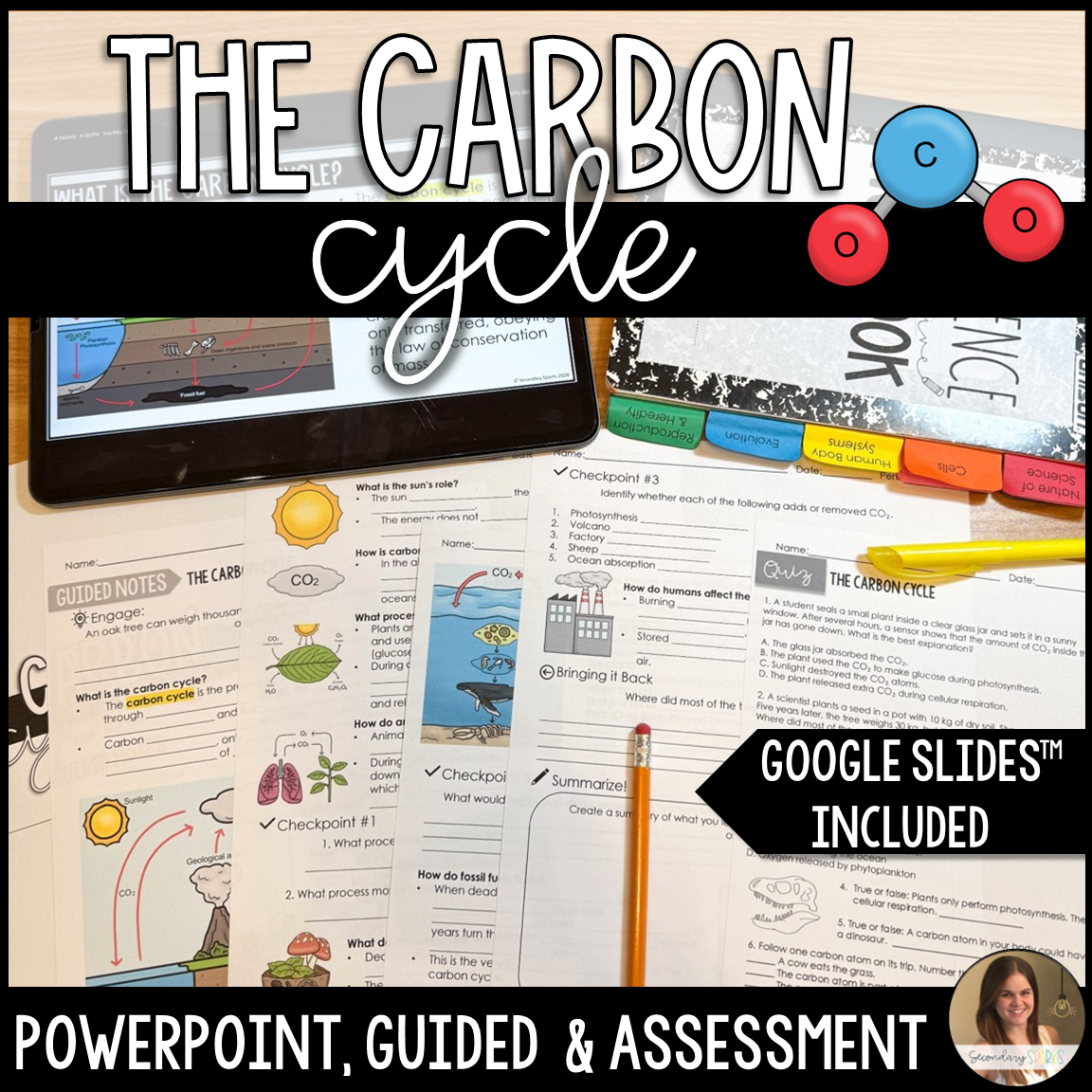
This carbon cycle lesson is perfect for middle school science! Do you need a no-prep way to teach how carbon moves between Earth’s surface, living things and nonliving things? This resource contains a PowerPoint lesson, Cornell notes style guided notes and an assessment that all tie together.
This resource is excellent for traditional and digital interactive science notebooks. The PowerPoint and guided notes are also included in Google Slides™, which makes this carbon cycle lesson a perfect digital resource for online learning! There is also a self-grading Google Forms™ assessment. This is a no prep resource!
Aligns to:
Florida Standard SC.8.L.18.3: Construct a scientific model of the carbon cycle to show how matter and energy are continuously transferred within and between organisms and their physical environment.
NGSS MS-LS2-3: Develop a model to describe the cycling of matter and flow of energy among living and nonliving parts of an ecosystem.
TEKS 8.11C: Describe the carbon cycle.
The carbon cycle lesson and guided notes are broken up into 4 different parts:
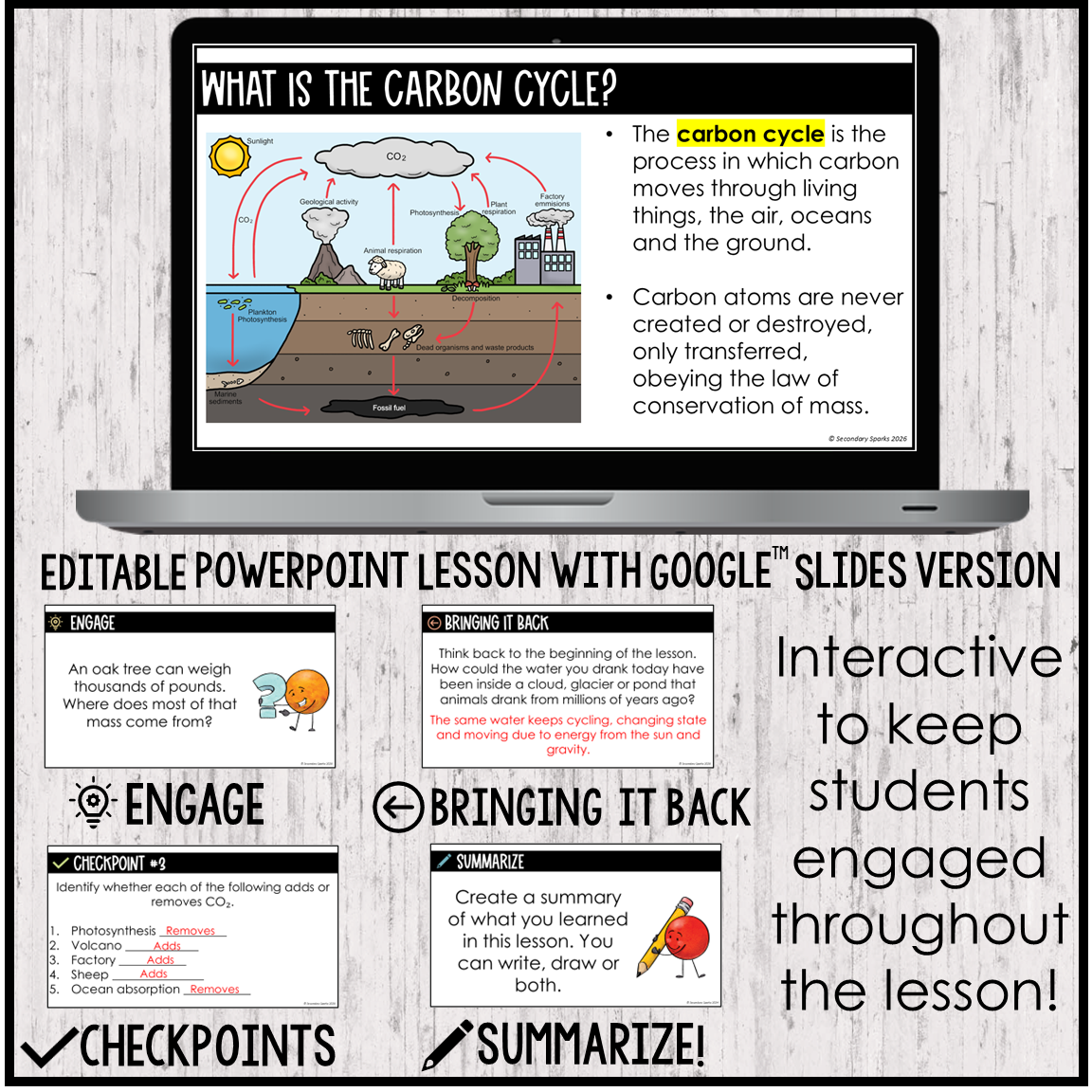
❔ Engage: This question gets students thinking before the lesson begins. Students answer it in their guided notes.
☑ Checkpoints: These questions throughout the lesson check what students are learning as they go. Students answer them in their guided notes. An answer key is included in the PowerPoint.
↵ Bringing it Back: This final question wraps up the lesson by tying students’ new knowledge back to the Engage question.
✐ Summarize! Students summarize their learning by writing, drawing or both.
All links for the Google Slides and Google Forms are included in the resource.
The PowerPoint is editable. The titles, images and clip art are not editable.
Carbon Cycle Guided Notes:
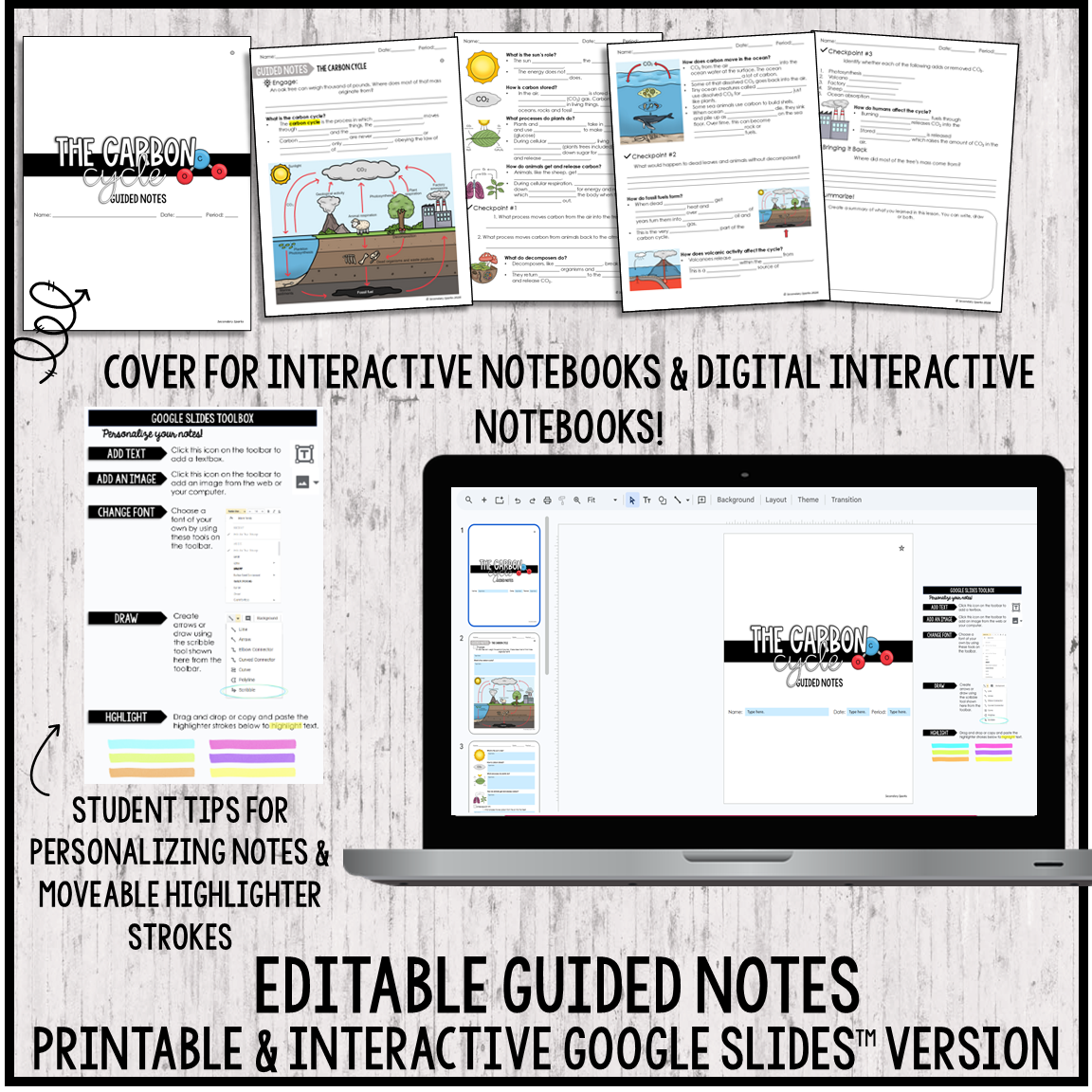
The Cornell style guided notes follow along with the lesson. Students can work through the lesson with the class as the teacher goes through the slides, or fill them out on their own if they are using the PowerPoint digitally. All the text except the title and cover page is editable.
Includes two cover pages for interactive notebook booklets, one in color and one in black and white.
The Google Slides version of the notes includes text boxes for students to add their own text. A Google Slides “toolbox” is included for students to reference for changing fonts, adding images, drawings and more. There are even drag-and-drop highlighter marks so students can make their notes more interactive.
*An answer key for the guided notes is included, so it can be easily printed and added to a teacher’s copy of an interactive science notebook.
Carbon Cycle Assessment:
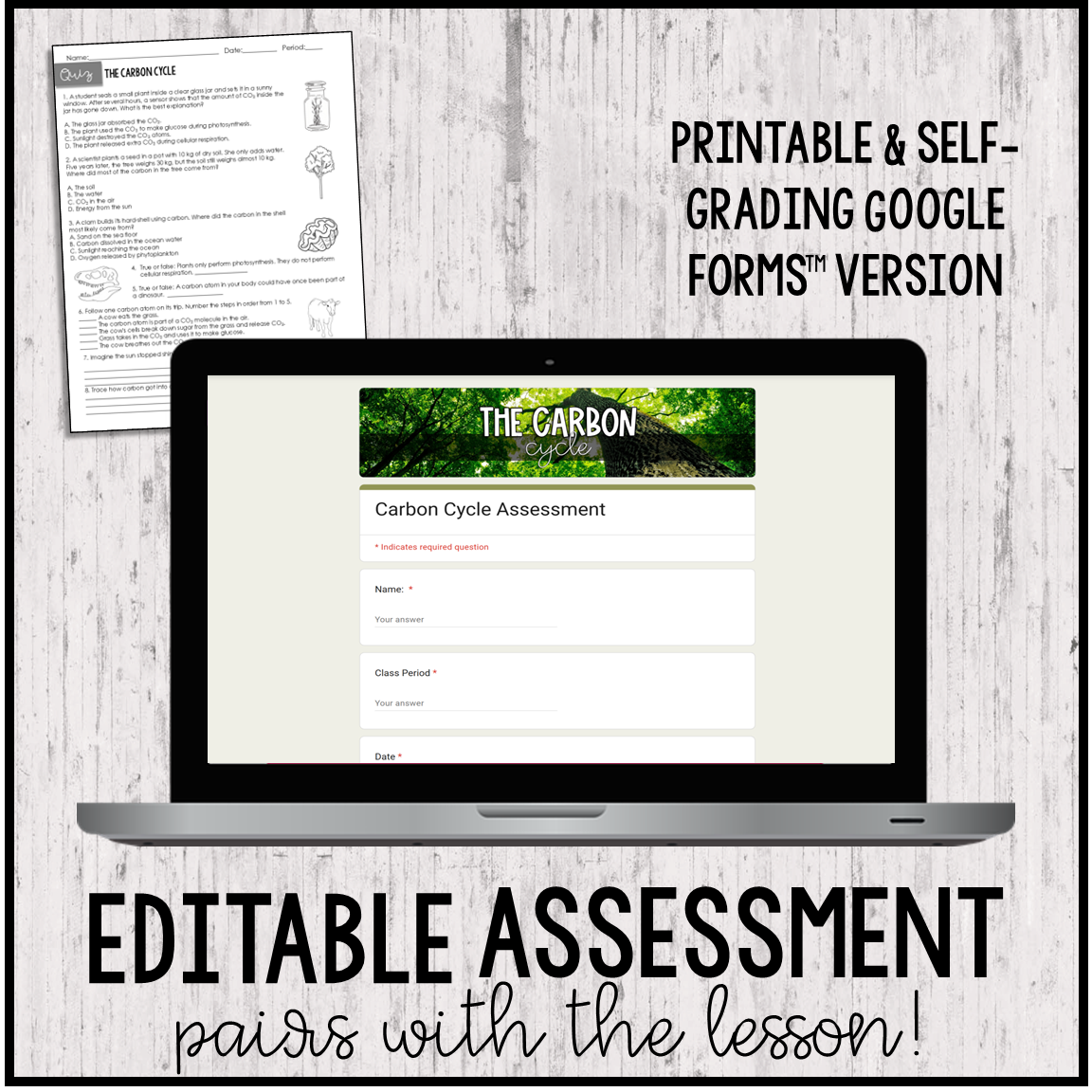
The assessment contains 10 questions with a mix of vocabulary, true or false, short answer and multiple choice questions. An answer key is included. Everything is editable except the title and any included clip art.
A Google Slides version is included, as well as a self-grading Google Forms version. The links are included in the resource.
Content covered:
⭐ What is the carbon cycle?
⭐ The carbon cycle
⭐ Conservation of mass
⭐ Carbon reservoirs
⭐ Photosynthesis
⭐ Cellular respiration
⭐ Consumers and food chains
⭐ Decomposers
⭐ Ocean carbon exchange
⭐ Phytoplankton and ocean sediment
⭐ Fossil fuel formation
⭐ Volcanoes
⭐ Combustion and human impact
⭐ Matter cycling vs. energy flow
*Each resource is in PDF and PowerPoint format for easy editing.
Pair this carbon cycle lesson with:
🌿 Water Cycle Lesson Guided Notes and Assessment to teach another of Earth’s major cycles
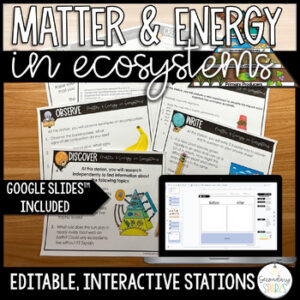
🌿 Matter & Energy Transfer in Ecosystems Stations Activities for hands-on practice after the lesson
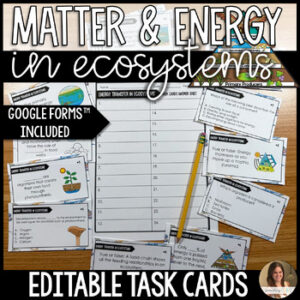
🌿 Matter & Energy Transfer in Ecosystems Task Cards for review and test prep
🌿 Energy Transfer in Ecosystems Warm Ups/Exit Tickets for daily spiral review
🌿 Nutrient Cycles in the Ocean Activities to extend the carbon cycle into marine science
Reviews
There are no reviews yet.