Description
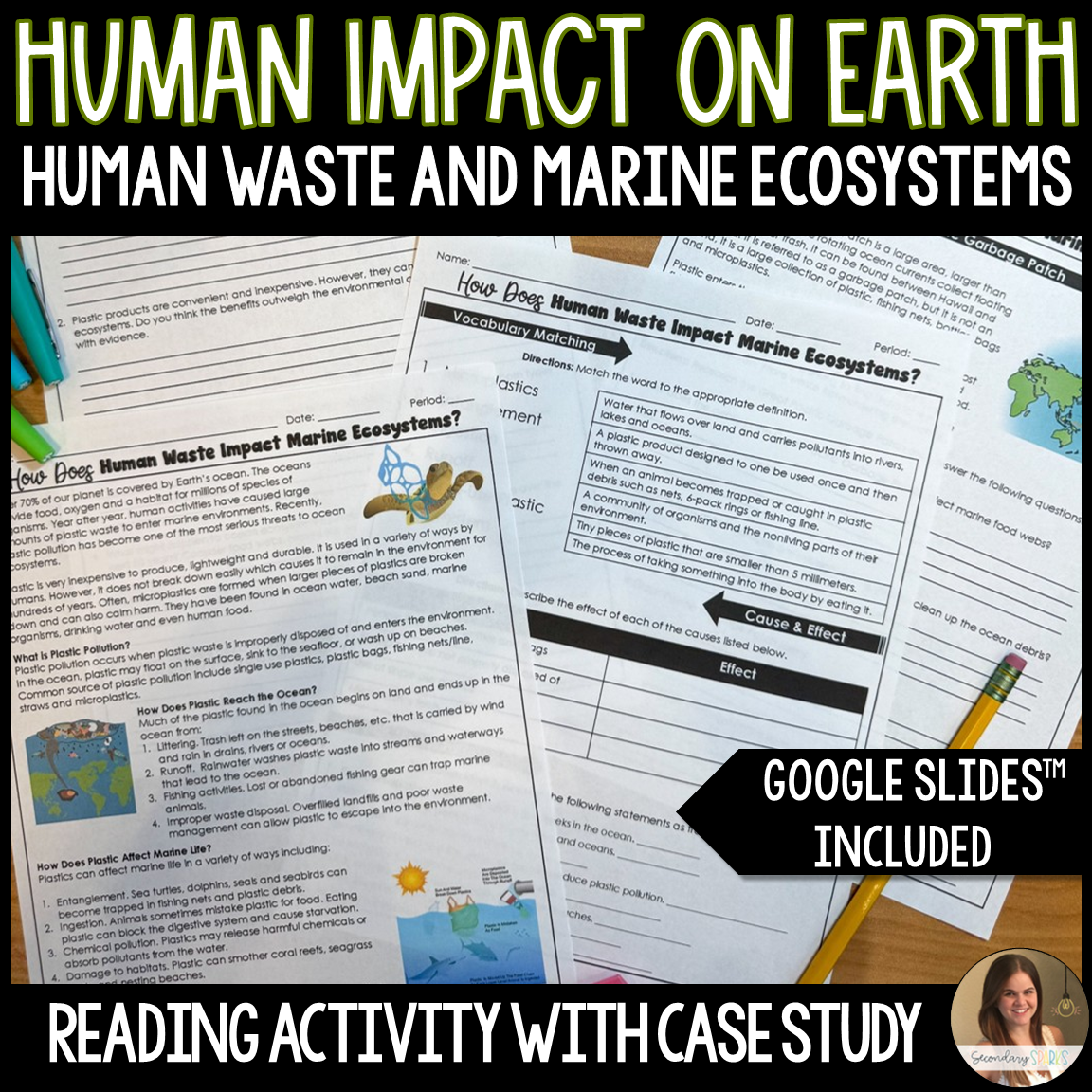
Looking for an engaging way to teach human impact on Earth, plastic pollution, marine ecosystems, and environmental conservation while strengthening reading comprehension skills? This Human Impact on Marine Ecosystems middle school science reading activity helps students explore how human waste impacts marine ecosystems through an informational article, critical thinking questions, and a real-world case study on the Great Pacific Garbage Patch.
Perfect for Earth Science, Environmental Science or Marine science classroom. This resource combines science content with literacy skills to help students read, analyze, explain cause-and-effect relationships, and support claims with evidence.
What’s Included?
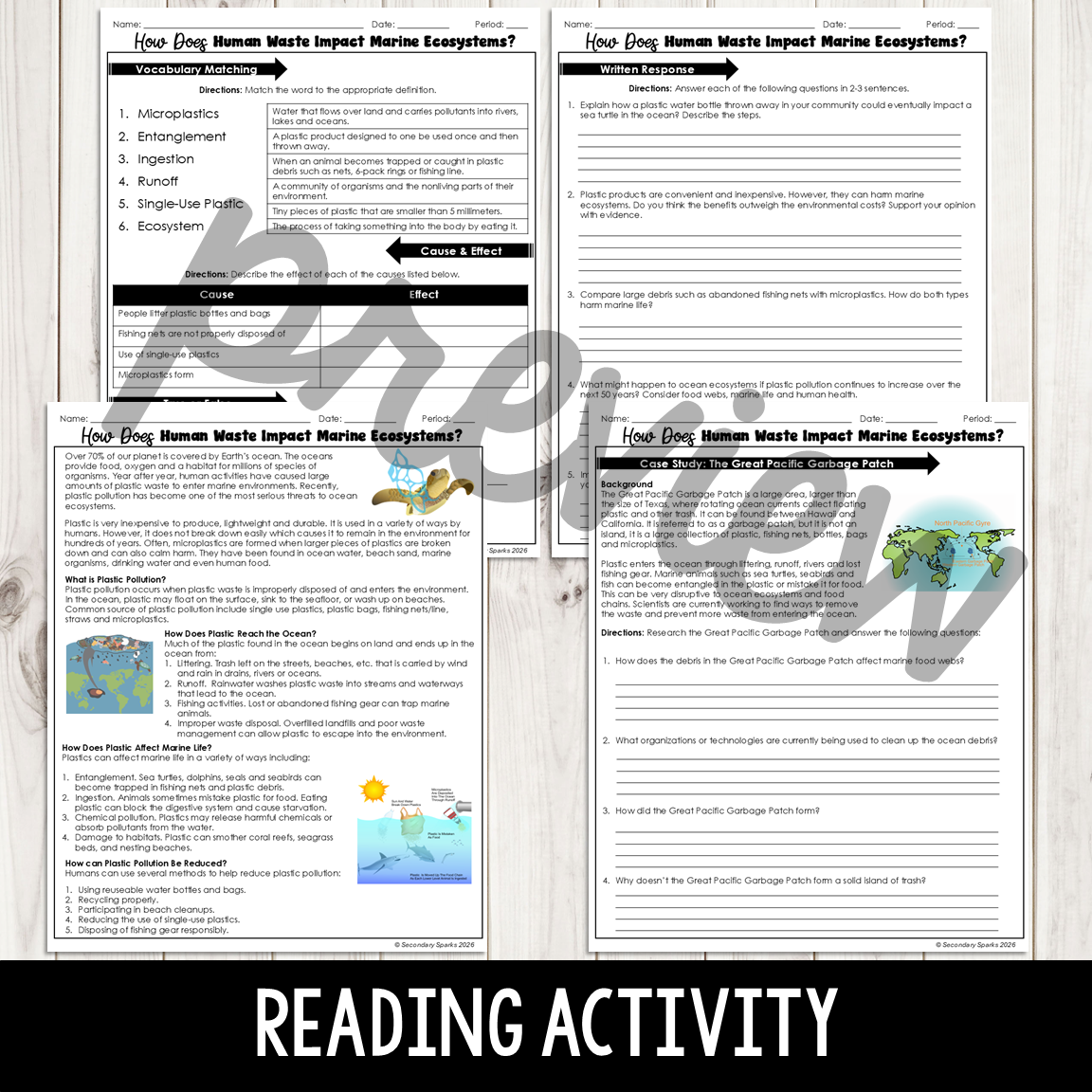
✔ Informational Reading Article: How Does Human Waste Impact Marine Ecosystems?
✔ Vocabulary Matching Activity
✔ Cause & Effect Practice
✔ True or False Questions
✔ Higher-Order Written Response Questions
✔ Real-World Case Study: The Great Pacific Garbage Patch
✔ Complete Answer Key
✔ Printable PDF Version
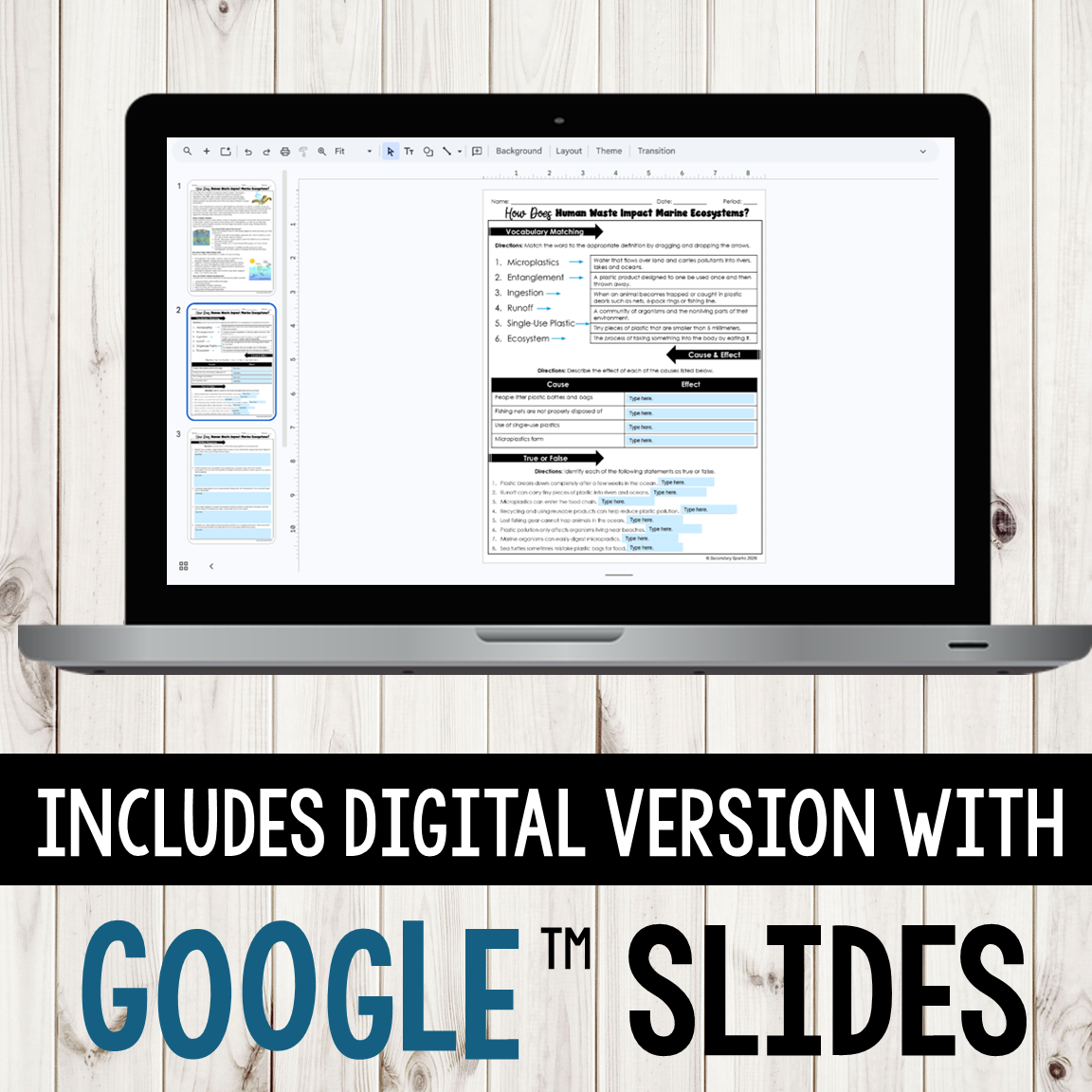
✔ Digital Google Slides Version for Online Learning
✔ Editable PowerPoint Version (Questions Only)
*Please note: Clipart, graphics, and design elements are not editable.*
Why Use Reading Comprehension in Science?
Science literacy is a critical skill for student success. Reading comprehension activities help students:
⭐ Build scientific vocabulary
⭐ Practice analyzing informational text
⭐ Strengthen critical thinking and reasoning skills
⭐ Connect science concepts to real-world issues
⭐ Support evidence-based writing and discussion
⭐ Reinforce science standards through cross-curricular learning
⭐ Prepare for state assessments that require reading and interpreting scientific texts
Perfect For:
✔ Independent Practice
✔ Science Stations
✔ Sub Plans
✔ Review Days
✔ Homework
✔ Small Group Instruction
✔ Whole Group Lessons
✔ Literacy Integration
✔ Early Finishers
✔ Interactive Science Notebooks
✔ Online Learning
✔ Homeschool
Standards Alignment
NGSS
MS-ESS3-3 – Apply scientific principles to design a method for monitoring and minimizing a human impact on the environment.
MS-ESS3-4 – Construct an argument supported by evidence for how increases in human population and per-capita consumption of natural resources impact Earth’s systems.
Florida Standard
SC.7.E.6.6 – Identify the impact that humans have had on Earth, such as deforestation, urbanization, desertification, erosion, air and water quality, and changing the flow of water.
Topics Discussed:
- Plastic Pollution
- Marine Ecosystems
- Human Impact on the Environment
- Ocean Conservation
- Microplastics
- Runoff
- Food Web Disruption
- Environmental Stewardship
- Great Pacific Garbage Patch
- Marine Animal Adaptations and Survival
- Cause and Effect Relationships in Ecosystems
This low-prep science activity makes it easy to incorporate meaningful reading and writing into your science classroom while helping students understand human impact on Earth.
Related resources:
Human Impact and Conservation Google Slides and Print Activities
Reviews
There are no reviews yet.