Most teachers treat middle school lab safety like the boring thing you have to get through before the “real science” starts.
You know the drill. Hand out the safety contract. Review the rules. Show the PowerPoint. Give the quiz. Check the box and move on.
But what if lab safety is actually one of the most valuable units you’ll teach all year?
Most middle school science teachers don’t struggle with lab safety because the content is difficult. They struggle because the first week of school feels like controlled chaos.
You’re learning names, assigning seats, setting up notebooks, explaining procedures, organizing materials, troubleshooting technology, and answering approximately 4,372 questions a day.
Somewhere in the middle of all that, you’re also supposed to teach students how to safely use lab equipment before they ever touch a beaker. The good news is, lab safety content is usually pretty easy for students to understand.

Start the School Year Strong with This Bundle
The first few weeks of school set the tone for the entire year. This all-in-one bundle includes everything you need to teach routines, build classroom culture, and get students engaged from day one.
Plan Less, Teach MoreWhy the First Week Needs a Different Approach
When students aren’t overwhelmed by challenging science concepts, they have more brainpower available to learn something just as important: how your classroom works. That’s why I like to think of middle school lab safety as classroom training camp.
It’s the perfect opportunity to teach students how to use interactive notebooks, participate in discussions, complete guided notes, work through stations, collaborate with partners, submit assignments, and follow routines.
In other words, it’s not only about teaching lab safety. You’re also teaching students how to be successful in your classroom for the rest of the year. And honestly? The routines you establish during your lab safety unit will probably save you more time than the safety content itself.
Let’s take a look at why lab safety might just be the best first week science unit you’ll teach all year.
Give Students Space to Learn the Routines
One of the biggest advantages of starting with lab safety is that students have room to focus on routines.
Think about it. If students are trying to learn a complicated scientific concept on day one, they’re less likely to remember where to find assignments, how to enter the classroom, or what they’re supposed to do when the bell rings.
However, when the content feels accessible, students can focus on both.
That’s why I love starting every class with a warm-up during our lab safety unit.
Warm-ups establish expectations immediately. Students know exactly what to do when they enter the room, which reduces downtime and prevents many common classroom management issues before they start.
Warm-ups also help students practice scientific thinking while reinforcing daily procedures.
Some of my favorite first-week warm-up questions include:
- Why do scientists have safety rules?
- What could happen if students ignore directions during a lab?
- Which lab safety rule do you think is most important?
The goal is to establish a routine students can follow every single day.
By the end of the week, students should already know exactly what class looks like when they walk through your door.

Build a Strong Science Routine from Day One
If you want students focused and learning from the moment they walk in the door, a strong warm-up routine makes all the difference. These ready-to-use science warm-ups help you build that habit from the first week of school and keep it going all year long.
Make Mornings EasierTeach Students How Learning Works in Your Classroom
Use your lab safety lessons to model the types of learning experiences students will discover throughout the year.
Ask prediction questions.
Show scenarios.
Pause for discussion.
Use quick checkpoints.
Invite students to explain their thinking.
When students actively participate, they remember concepts better. More importantly, they learn what participation looks like in your classroom.
This is also the perfect time to introduce guided notes.
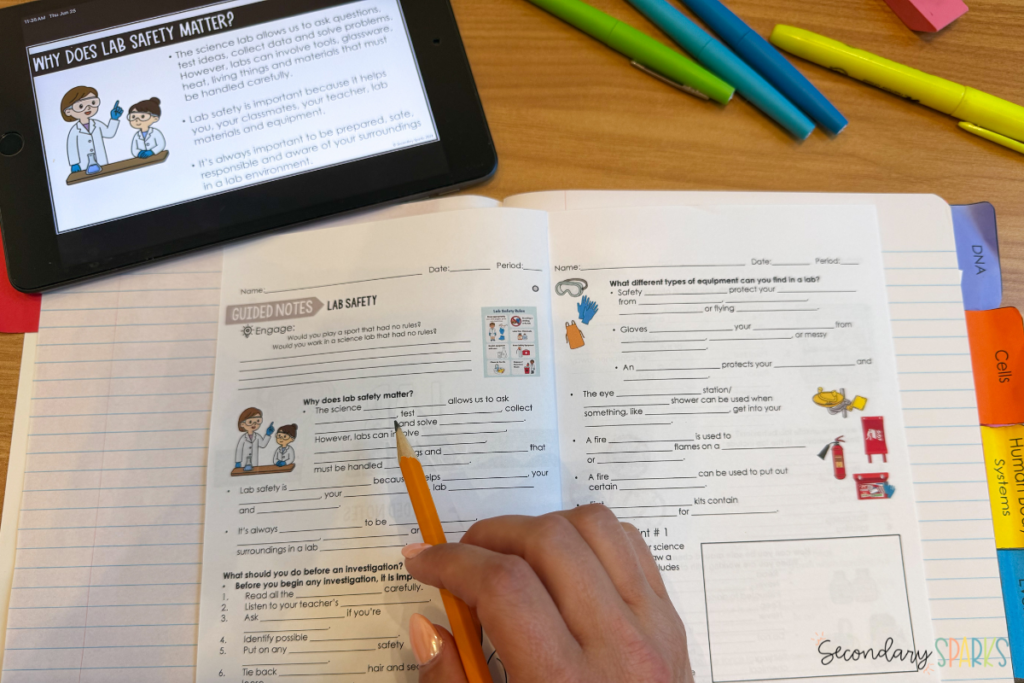
Guided notes help students stay engaged because they must listen for key information and record important ideas as they learn.
For students, guided notes:
- Improve focus
- Support organization
- Encourage active listening
- Create useful study materials
For teachers, guided notes:
- Reduce off-task behavior
- Increase participation
- Provide built-in accountability
- Make it easier to monitor understanding
If you use interactive science notebooks, this is also a great opportunity to establish expectations from day one.
Students may think they’re learning about safety procedures. In reality, they’re learning how instruction, note-taking, and organization work in your classroom.
Introduce Collaborative Learning Before the Content Gets Hard
One of the smartest things you can do during the first week is teach collaborative structures before students encounter challenging content.
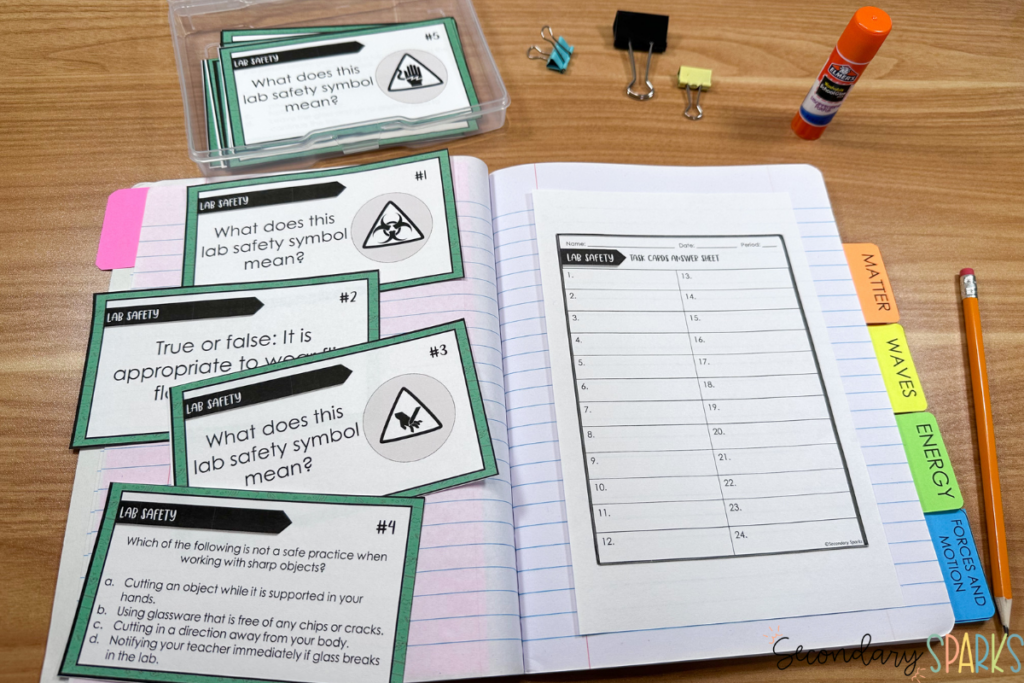
That’s why task cards work so well during a lab safety unit.
Students already understand most of the safety concepts being discussed. As a result, they can focus their energy on learning how the activity itself works.
For example, students can learn:
- How to rotate through stations
- How to participate in a gallery walk
- How to work with a partner
- How to collaborate in small groups
- How to discuss ideas respectfully
At the same time, they’re reviewing important safety concepts.
Let Students Experience Ownership Early
The first week of school is also a great time to show students that learning doesn’t always look the same for everyone.
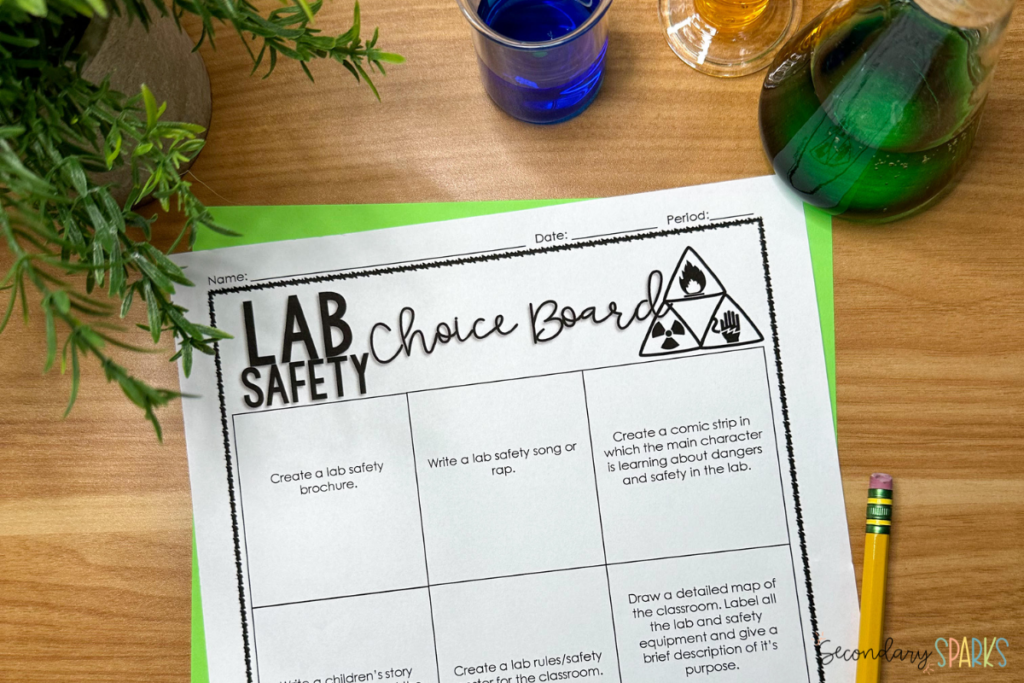
That’s where choice boards come in.
Instead of assigning the exact same task to every student, choice boards allow students to demonstrate understanding in different ways.
Students might choose to:
- Draw a visual representation
- Write an explanation
- Create a presentation
- Record a podcast
- Film a video
- Design a brochure
- Analyze a safety scenario
Students love having choices because it gives them ownership over their learning.
Additionally, choice boards help communicate an important message early in the year: there isn’t always one right way to show what you know.
When students experience that flexibility during the first week, they’re often more willing to take academic risks later. Again, the goal extends beyond lab safety. You’re introducing students to the culture of your classroom.
Catch Misconceptions Before They Become Problems
Before students begin working with equipment, chemicals, or investigations, they need to demonstrate that they understand safety expectations.
They should know how to:
- Identify lab equipment
- Interpret safety symbols
- Follow procedures
- Respond to emergencies
- Recognize unsafe situations
Assessments give you valuable information as a teacher. If students have misconceptions, it’s much better to discover them now than during a future lab activity.
Assessments also help students practice another important classroom routine. They’re learning what quizzes, tests, and accountability look like in your classroom.
The Secret Goal of Your First Week
Here’s the part I think many teachers overlook. Every activity during your lab safety unit is teaching two things at the same time.
Students are learning safety expectations and how your classroom operates.
- When students complete warm-ups, they’re learning routines.
- When students use guided notes, they’re learning notebook expectations.
- When students participate in stations, they’re learning classroom procedures.
- When students work with partners, they’re learning collaboration skills.
- When students complete assessments, they’re learning accountability.
The science content matters, but the procedures matter too.
In fact, the routines students learn during this first unit may have a bigger impact on the rest of the year than the content itself. Every activity is an opportunity to reinforce expectations.
By the time your first major unit begins, students already know how your classroom works. And that makes everything easier.
A Simple 5 Day Plan for Success
Need a roadmap for the week? Here’s one possible structure.
Monday:
- Warm-up
- Introductions
- Begin interactive lesson
- Guided notes
Tuesday:
- Warm-up
- Finish lesson
- Checkpoints for understanding
- Guided notes summary
- Discussion
Wednesday:
- Warm-up
- Task card gallery walk
- Review activities
Thursday:
- Warm-up
- Choice board project
- Collaborative learning activity
Friday:
- Warm-up
- Review game
- Assessment
- Reflection
This plan gives students multiple opportunities to engage with lab safety concepts while practicing classroom routines in meaningful ways.
When you look back at your first week of school, you’ll probably remember the little moments more than the lessons themselves.
The first successful class discussion. The first time students confidently walk in and start their warm-up. The first moment they know exactly what to do without needing a reminder.
Those moments don’t happen by accident.
They happen because you took the time to teach students what your classroom looks like and how they can be successful in it.
That’s what makes middle school lab safety such a perfect first unit. Yes, students are learning important safety expectations. But they’re also building the habits, routines, and confidence they’ll carry with them all year long.
So don’t feel like you have to rush through these first lessons to get to the “real” science. The work you’re doing now matters.
I hope you have an amazing year!
Leave a Reply