Somewhere along the way, it feels like teaching became a competition to see who could survive on the least amount of sleep while creating the prettiest classroom.
If you’re leaving at contract time, reusing lesson plans, using the same warm-up routine every day, or buying resources instead of making everything from scratch, social media might make you feel like you’re doing something wrong. But after teaching middle school science for over a decade, I can confidently say this: you’re probably doing something right.
Simplifying your classroom isn’t lazy. In fact, it’s one of the best forms of teacher burnout prevention because it allows you to save your energy for the things that actually matter. There’s a big difference between being intentional and being overwhelmed.
The teachers who last in this profession aren’t the ones who say yes to everything or create every single thing from scratch. They’re the ones who figure out what actually moves student learning forward and let go of the rest.
So today, we’re clearing your conscience of 15 things teachers often feel guilty about but shouldn’t. These aren’t shortcuts. They’re strategies that help you protect your time, your energy, and your love for teaching.
1. Reusing Lesson Plans for Teacher Burnout Prevention
The Accusation: Real teachers create brand new lessons every year.
Reality: Every year, your students are new. Your lessons don’t have to be.
One of the biggest myths in teaching is that your lessons should look completely different every single year. However, great teachers know that the magic usually happens through refinement, not reinvention.
The lesson you taught last year might not need to be completely rebuilt. Maybe it needs a few updated examples or directions need to be clearer. Maybe you noticed students struggled with one specific concept and you want to add a quick review.
Your planning time is much better spent looking at student work, reflecting on what students understood, and making small improvements than redesigning every slide deck from scratch.
One of my favorite habits was keeping a quick note after each lesson with:
- What worked?
- Students were confused by…
- Next year I should change…
That tiny reflection saved me hours because I wasn’t starting over every August. Instead, I was building on what I had already created.
Editable resources like my done for you lessons and guided notes make this process even easier because you can quickly adjust examples, questions, or activities without starting from a blank page.
Your future teacher self will thank you.
2. Sticking to a Daily Warm-Up Routine
The Accusation: Students will get bored if you do the same thing every day.
The Reality: Students actually thrive on predictable routines.
You know who gets bored? The teacher who spends Sunday night trying to create 180 different bell ringers.
A consistent warm-up routine is one of those simple classroom choices that makes your entire day run smoother. Students walk in knowing exactly what to do and you have a few quiet minutes to prepare for the lesson. Everyone wins.
A daily warm-up routine helps:
- Reduce transition time
- Improve classroom management
- Get students focused faster
- Provide spiral review throughout the year
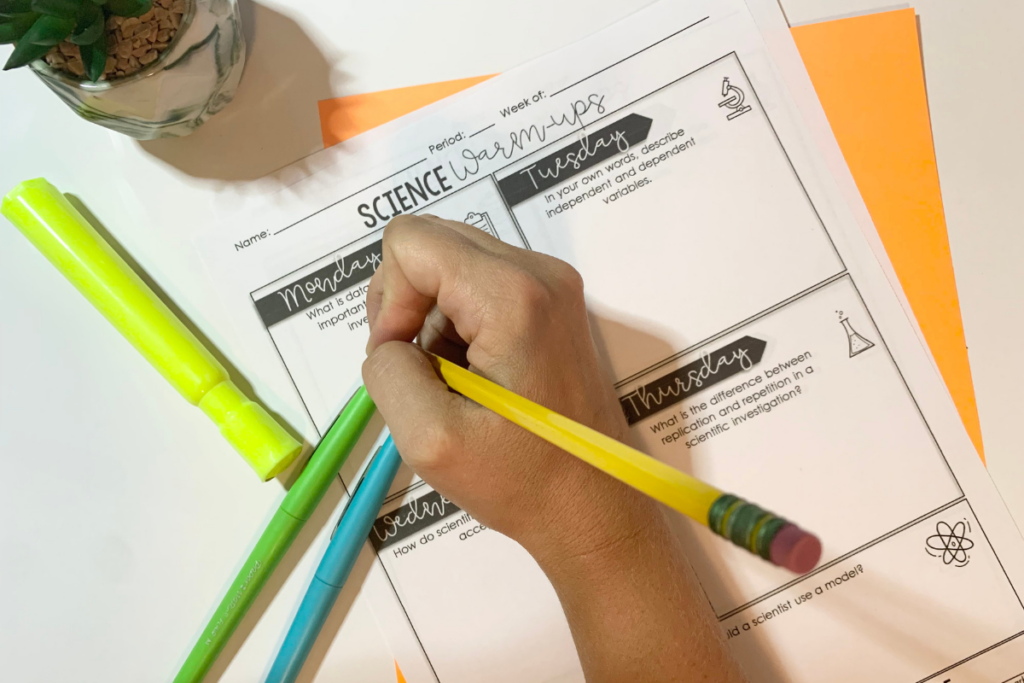
Plus, warm-ups are a great opportunity to revisit older science concepts instead of waiting until testing season to panic-review everything students forgot.
My year-long middle school science spiral review warm-ups are designed to help you do exactly that while saving you planning time.
3. Teaching Procedures Before Science Content
The Accusation: You’re wasting valuable instructional time.
Reality: Procedures ARE instruction.
I know it feels strange to spend the first days of school talking about entering the classroom, setting up notebooks, and cleaning up lab materials instead of diving into science content.
However, a chaotic classroom wastes far more instructional minutes than taking time to teach expectations.
Think about all the procedures students need to know in a science classroom:
- How to enter class
- How to set up an interactive notebook
- How to complete a lab
- How to work with partners
- How to transition between stations
- How to clean up materials safely
Those routines don’t magically happen. They have to be taught.
One of my favorite times to teach procedures is during a lab safety unit. Students are learning important science concepts, but the content isn’t so overwhelming that they can’t practice classroom routines at the same time.
Remember: the time you spend teaching procedures now will save you so much time later.
4. Buying Resources to Avoid Teacher Burnout
The Accusation: Good teachers make everything themselves.
Reality: Your time has value.
If spending $5 saves you three hours of planning, you didn’t waste money. You saved yourself time.
Teachers are often expected to create everything from scratch: lessons, labs, worksheets, slides, activities, assessments…the list never ends.
But here’s the thing. You don’t get extra points for being exhausted.
Using resources from other teachers, collaborating with your department, or asking for help is not a sign that you aren’t creative. It’s a sign that you understand your limits.
Teacher burnout prevention means recognizing that your energy is a resource too.
And if buying resources isn’t your thing, that’s okay! Your teacher community is full of amazing people who are willing to share ideas. Ask your science team. Reach out to teachers in your district. Connect with other educators online.
You were never meant to do this job completely alone.
5. Reusing Labs Every Year
The Accusation: Students deserve something new every year.
Reality: Your students have never done that lab before.
This one makes me laugh because I used to feel guilty about repeating labs.
Then I remembered something important… My students weren’t comparing this year’s classroom to last year’s classroom. They were experiencing it for the first time.
If students were engaged, the standards were covered, and the lab worked well, why replace it? Instead of completely changing a lab every year, try improving it.
Maybe you:
- Shorten directions
- Add reflection questions
- Increase rigor
- Improve student discussion
- Add a stronger connection to the real world
There is no award for reinventing the wheel every August.
Some of my favorite food labs are still favorites year after year because they work. Students love them, they meet learning goals, and they create memorable science experiences. That’s what matters.
6. Not Having a Pinterest-Worthy Classroom
The Accusation: Your classroom isn’t aesthetic enough.
The Reality: Students remember experiences. They don’t remember whether your bulletin board borders matched.
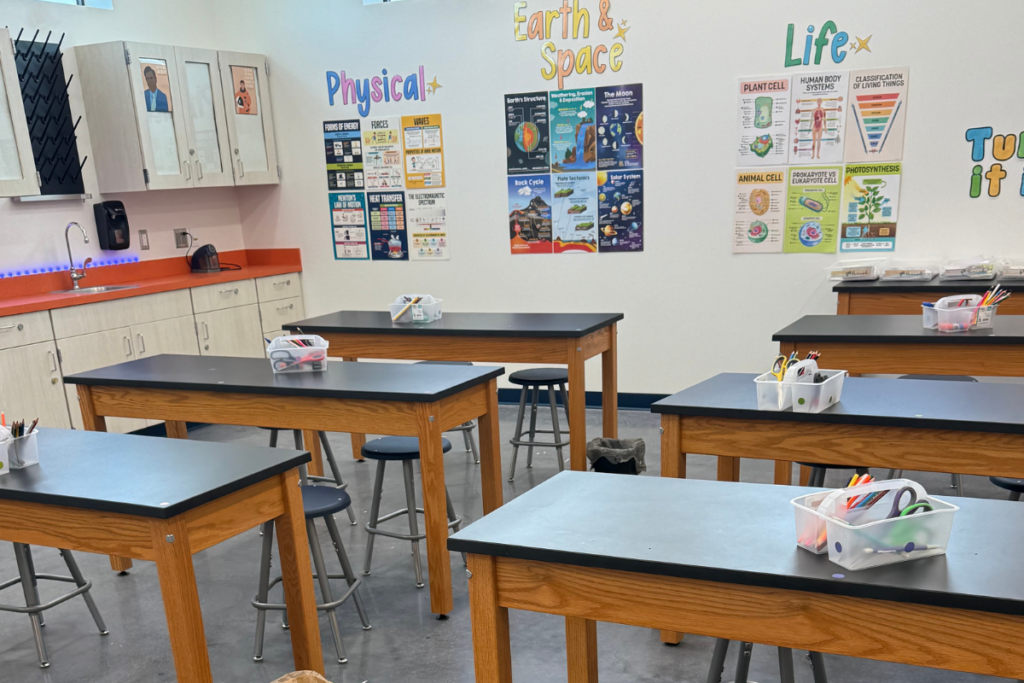
Don’t get me wrong, I love a cute classroom as much as the next teacher. Decorating can be fun! But your students aren’t walking into your room thinking, “Wow, those color-coordinated bins are amazing!”
They notice:
- Whether they feel welcome
- Whether they know what to expect
- Whether your classroom feels organized
- Whether you care about them
- Whether science feels exciting
A clean, organized science classroom will always beat a beautifully decorated chaotic one. Your classroom doesn’t have to look like a magazine spread.
7. Making Students Clean Up
The Accusation: It’s faster if I just do it myself.
Reality: Maybe today. Not by October.
I get it. Sometimes grabbing the supplies yourself feels easier. Sometimes you can clean a lab station faster than your students.
But your goal isn’t just getting the room clean. Your goal is teaching responsibility. Students need to learn that they are part of the classroom community.
Lab cleanup is a procedure just like anything else.
Teach it. Practice it. Time it. Celebrate improvement.
Eventually, your students will know exactly what to do without you reminding them ten times. And that is a beautiful thing.
8. Giving Guided Notes
The Accusation: You’re spoon-feeding students.
Reality: Guided notes help students focus on learning.
Middle school science has a lot of new vocabulary and complicated concepts. Expecting students to listen, understand, organize information, and copy every word from the board is a lot.
Guided notes reduce cognitive overload so students can focus on the actual science.
They also support:
- Students with accommodations
- English language learners
- Organization skills
- Study habits
- Interactive notebook routines
There is a difference between giving students support and lowering expectations.
My Life Science, Physical Science, and Earth/Space Science guided notes help students stay organized while still allowing opportunities for thinking and discussion.
9. Saying No
The Accusation: You’re not fun.
The Reality: Boundaries create better learning.
Sometimes being a great teacher means saying no.
No, we’re not doing slime today.
We’re not having a free day.
We’re not watching a movie just because it’s Friday.
Of course, your classroom should include fun.
But fun does not mean every single day has to be a game or special activity.
Sometimes learning is hard. Sometimes learning is boring. That’s okay.
Students appreciate teachers who are consistent because consistency makes them feel safe.
10. Leaving at Contract Time
The Accusation: The best teachers stay late.
Reality: The best teachers come back tomorrow rested.
This one took me years to believe.
I thought staying late proved I cared. I thought answering one more email and creating one more activity made me a better teacher.
But eventually, I realized something. Burnt out teachers don’t become better teachers by working more hours. They become exhausted.
I became a better teacher when I gave myself permission to recharge, spend time with my family, and have a life outside my classroom.
Your students need the teacher you are when you’re healthy, not the teacher you become when you’re running on empty.
11. Using Routines Instead of Constantly Changing Activities
The Accusation: Your class is repetitive.
Reality: Predictability lowers student anxiety.
Predictability lowers student anxiety.
Students don’t need constant surprises. They need to know what success looks like.
Warm-ups, stations, exit tickets, notebook checks, and bell ringers might seem repetitive to you. But to students, those routines create confidence.
They know what’s coming. And that makes learning easier.
12. Making Students Do the Thinking
The Accusation: Just tell them the answer if they don’t know.
Reality: Science isn’t about memorizing. It’s about figuring things out.
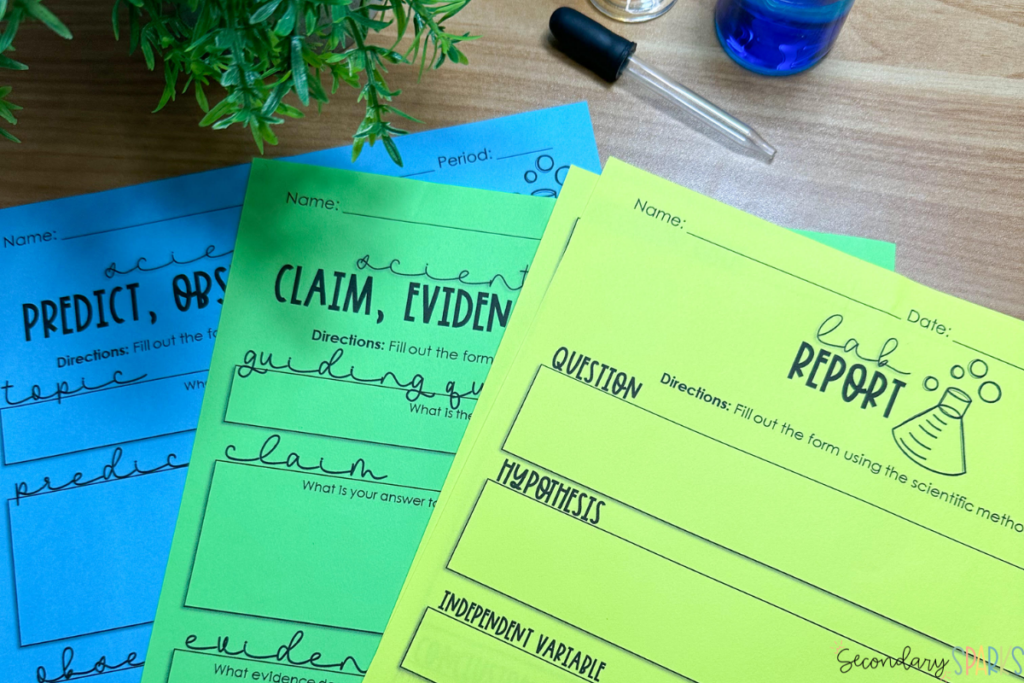
The best science classrooms are not classrooms where students copy everything from the board. They are classrooms where students investigate, question, and make connections.
Use strategies like:
- CER Templates (Claim-Evidence-Reasoning)
- Predict-Observe-Explain (POE)
- Inquiry activities
- Phenomena-based lessons
- Choice boards
- Stations
Students might struggle at first and that’s okay. Thinking is a skill they have to practice.
13. Holding Students Accountable
The Accusation: You’re too strict.
Reality: Consistency is kindness.
Having expectations doesn’t mean you’re mean. It means students know what matters.
Whether it’s missing work, lab cleanup, notebook checks, or deadlines, students need teachers who follow through. Strict does not equal unkind.
You can be the teacher who jokes with students, creates fun memories, and still holds them accountable. In fact, students often appreciate those teachers the most.
14. Using Games for Review
The Accusation: They’re just playing.
Reality: Engagement improves retention.
Games are not just a way to fill time. Used intentionally, they can help students review vocabulary, practice concepts, and prepare for assessments.
Try:
- Science Bingo
- Task cards
- Review games
- Movement activities
- Friendly competitions
Students can have fun and learn at the same time.
15. Taking Care of Yourself
The Accusation: Teachers who work the hardest are the best.
Reality: Absolutely not.
The teacher who sacrifices every weekend, skips every hobby, and feels guilty for resting is not automatically the best teacher.
You deserve summers, weekends, hobbies, and family dinners. You deserve to watch Netflix without feeling guilty.
Teaching is a marathon. The goal isn’t to just survive back to school season. The goal is to still love teaching years from now.
So if you’re leaving at contract time, reusing lessons, repeating labs, using routines, or saying no more often…
I hope you hear this: You’re probably doing something right.
Leave a Reply