Teaching Energy Transformations in Physical Science
As science teachers, it is a goal of ours to bring the concepts we are teaching to life. To really show our students what we are talking about so that they can apply it to their real lives and so we can see that little light bulb turn on in their head when they understand. That’s the best part about teaching, right? Teaching energy transformations has always been that unit for me. That unit where you can see the figurative energy transformation occur and the light bulb turns on. When introducing energy transformations, you can start by telling students that those transformations are occurring ALL the time. Picking up your pencil? Energy transformation. Heating up a toaster pastry for breakfast before school? Energy transformation. Sneakily checking your phone during class to see if a friend texted you back? Energy transformation. These little examples get them interested and get them thinking.Start by Introducing the Forms of Energy
Before students can understand that energy transforms, we first need to tell them what forms of energy are out there, right?You’ll want to talk about:
- Potential Energy
- Kinetic Energy
- Mechanical Energy
- Light (Radiant) Energy
- Chemical Energy
- Electromagnetic Energy
- Electrical Energy
- Nuclear Energy
- Sound Energy
- Thermal Energy & Heat
Discuss what an Energy Transformation is
Now that your students know and can identify the forms of energy, you can now discuss how those energy transformations occur. Start with the simple examples such as the ones below. The simple use of arrows allows them to actually see where the flow of energy is going. To teach all these concepts, students can complete a set of guided notes that goes along with a lesson. These notes make it easy for students to refer back to the information in their interactive science notebooks. They also align with NGSS standards PS-PS3-5, TEKS 6.9C and Florida SC.7.P.11.2. Don’t forget to talk about energy efficiency and the Law of Conservation of Energy! For the most part, the standards don’t require students to know the math to calculate energy efficiency in middle school but always check with your district standards first.
Energy Transformations Activities
This is a really hands-on unit which makes it so much more fun and engaging for students because they are actually immersed in the content. 1. One of my favorite online, interactive labs is from PhET. Their Energy Forms and Changes simulation makes it easy for students to interact with different forms of energy and create their own systems in which they manipulate different forms of energy to create different energy transformations. It’s also free! I include this activity as part of my energy transformations stations since it’s easy to prep but super valuable! 2. You can also have students actually perform their own energy transformations. Simple ones, of course. This Energy Transformations CER lab allows students to move through stations performing simple activities to focus on the energy transformations occurring and explain them in CER format.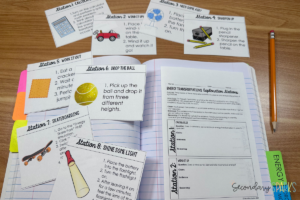 3. Energy Transformations Posters. Have students create a poster that represents an energy transformation that relates to them somehow. If they love playing football, they can make one related to that. If they love video games, they can make one related to that. Gearing it towards their interests makes them more invested in the activity. I have them draw (or cut and paste photos from a magazine) their energy transformation and then write a paragraph explaining it on the poster.
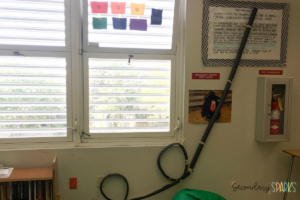
4. Roller Coasters. Most middle schoolers love roller coasters. Not only are they fun but they are a perfect way to get your students to understand potential and kinetic energy. You can have your students create their own using foam insulation, painters tape, marbles and a cup. Students can look at the pieces, draw out a design and then actually build it. The simple challenge I would give to students is that the rollercoaster needed to have two loops and the marble had to end up in the cup.
This activity was great because students had to adjust their roller coaster often to either reduce the amount of kinetic or potential energy or increase it to make sure the marble ended up in the cup. It’s a bit of a crazy lab but I promise, you students will LOVE it. Findmarbles and cups at the dollar store and purchase the insulation pipes from Home Depot. You can also reuse them year after year!
3. Energy Transformations Posters. Have students create a poster that represents an energy transformation that relates to them somehow. If they love playing football, they can make one related to that. If they love video games, they can make one related to that. Gearing it towards their interests makes them more invested in the activity. I have them draw (or cut and paste photos from a magazine) their energy transformation and then write a paragraph explaining it on the poster.
4. Roller Coasters. Most middle schoolers love roller coasters. Not only are they fun but they are a perfect way to get your students to understand potential and kinetic energy. You can have your students create their own using foam insulation, painters tape, marbles and a cup. Students can look at the pieces, draw out a design and then actually build it. The simple challenge I would give to students is that the rollercoaster needed to have two loops and the marble had to end up in the cup.
This activity was great because students had to adjust their roller coaster often to either reduce the amount of kinetic or potential energy or increase it to make sure the marble ended up in the cup. It’s a bit of a crazy lab but I promise, you students will LOVE it. Findmarbles and cups at the dollar store and purchase the insulation pipes from Home Depot. You can also reuse them year after year!
 You can also have your students make roller coasters out of paper! Mrs. Nelson’s Middles has a great activity that you can find here.
5. Other low-prep activities for review can include task cards or Google Slides/print activities. These are great for reviewing vocabulary and the basics of energy transformations. You can also find a bundle of energy transformations activities here.
You can also have your students make roller coasters out of paper! Mrs. Nelson’s Middles has a great activity that you can find here.
5. Other low-prep activities for review can include task cards or Google Slides/print activities. These are great for reviewing vocabulary and the basics of energy transformations. You can also find a bundle of energy transformations activities here.
Leave a Reply