Middle school students love structure. Will they ever admit it? Absolutely not.
However, after teaching middle school science for years, I can confidently say that students thrive when they know exactly what to expect. One of the best classroom management changes I ever made was consistently using middle school daily agenda slides.
And honestly? I wish I had started sooner.
When I first created agenda slides, I thought they were mostly for me. I could use them as a place to put reminders and they gave students something to look at while they settled into class.
What I didn’t expect though was how much they would transform the entire flow of my classroom.
The number of “What are we doing today?” questions dropped dramatically. Students walked in and got started without me saying a word. My anxious students seemed more comfortable. Even better, parents benefited because they could actually see what was happening in class.
And maybe my favorite part? I felt more organized too.
So, if you’ve been looking for a simple classroom management strategy that doesn’t require fancy systems or hours of prep, let me introduce you to agenda slides.
Make Classroom Organization Easier
Take the guesswork out of creating agenda slides with this bundle of 300+ editable templates. Perfect for helping students stay on track, reducing repetitive questions, and creating a more organized classroom from day one.
Get the BundleWhat Are Daily Agenda Slides?
A daily agenda slide is simply a slide you project at the beginning of class that tells students what they need to know for the day.
That’s it.
I use mine every single day on my SmartBoard. Students would walk in, look at the board, grab their materials, and get started on their warm-up before I even had a chance to finish taking attendance.
It’s one of those classroom systems that seems small but makes a huge difference.
Even better, you can create them using whatever platform you already use:
- Google Slides
- PowerPoint
- Canva
As a result, these agenda slides reduce student anxiety about what to expect, keep students organized, keep me organized and help me begin my class without even saying a word.
No more “Mrs. Rudolph, what are we doing today?!” 10 times a class period.
Plus, they add some extra decor to my classroom that I can change out for each topic, season or holiday to make it even more fun!
What Do I Put on My Daily Agenda Slides?
One of the questions I get most often is, “What should I actually include?”
The answer is whatever makes your life easier. Seriously! Your agenda slides should work for you, not create more work.
That said, there are a few sections that have become staples in my classroom.
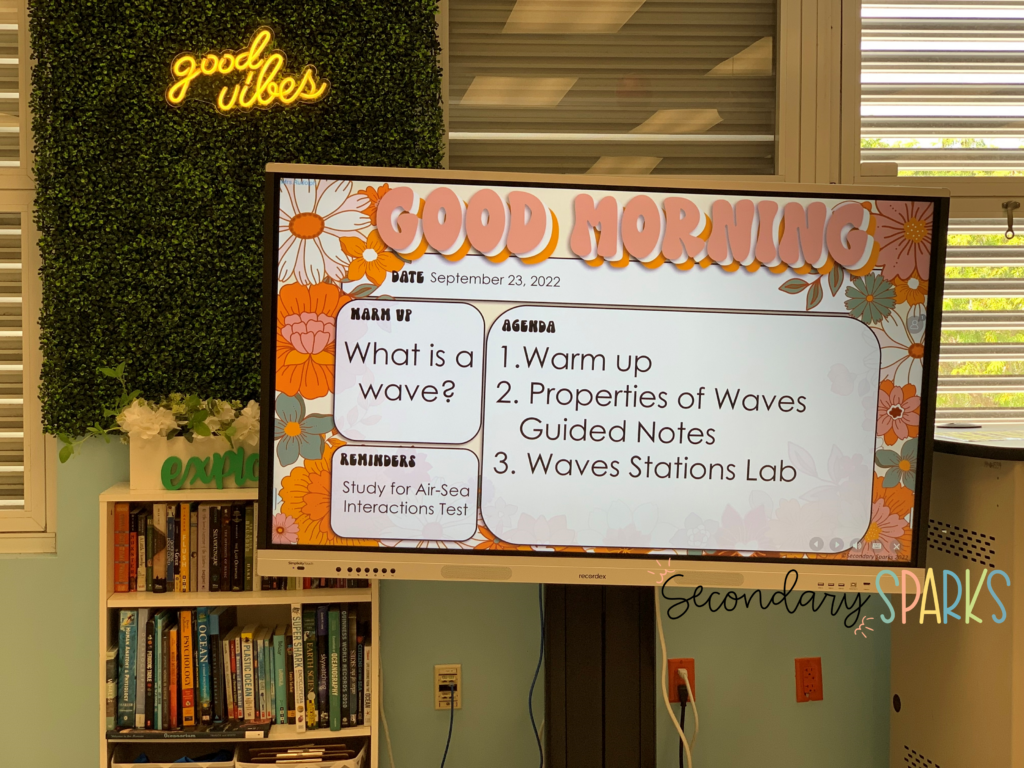
1. Warm-Ups or Bellringers
Having a warm up directly on my agenda slide is my favorite part of the whole thing. Every single day, students knew exactly what to do when they walked through the door.
No waiting, asking questions, or wandering around chatting with friends for five minutes before getting started.
Just walk in and begin.
As a middle school teacher, that routine is pure gold.
2. Learning Goals or Objectives
I know, I know. This one sounds boring.
But students benefit from knowing where the lesson is headed, and administrators love seeing learning goals clearly posted.
It’s a win for everyone.
3. Your Agenda
I like to give students a simple roadmap of what we’ll be doing.
For example:
- Bellringer
- Review warm-up
- Lab activity
- Group discussion
- Exit ticket
Middle schoolers like knowing what’s coming next. It helps eliminate a lot of uncertainty throughout class.
4. Materials Needed
Need Chromebooks today? Science notebooks? Colored pencils?
Put it on the slide.
The fewer times you have to repeat yourself, the better.
5. Reminders and Homework
This section saves me constantly. Quiz dates. Field trip forms. Missing assignments. Club meetings. Project deadlines.
Everything goes here.
6. Exit Ticket Directions
If students know what’s expected before the end of class arrives, transitions become much smoother.
And anything that makes transitions smoother in middle school deserves a standing ovation.
Why Every Middle School Teacher Should Use Daily Agenda Slides
If you’ve made it this far, you’re probably thinking, “Okay, they’re nice. But are they really worth the effort?”
For me, the answer is a definite yes.
In fact, the few minutes I spent creating my middle school daily agenda slides each week saved me so much time, energy, and repetition throughout the school day.
Here are some of the biggest benefits I’ve experienced.
They Keep Your Classroom Organized
Sometimes agenda slides aren’t just for students. Sometimes they’re for us too, because teacher brain is real.
There were plenty of days when I glanced up at my own slide and thought, “Oh right. That’s what we’re doing next.”
Especially during testing season, assembly days, or those random weeks when everything seems slightly chaotic.
As a result, having the entire lesson mapped out helped me stay focused and kept the day moving smoothly.
Additionally, agenda slides helped with:
- Pacing lessons
- Faster transitions
- Remembering important announcements
- Staying on schedule
- Creating substitute plans
It’s basically a built-in checklist that’s visible all day long.
They Make Warm-Ups More Effective
One of the biggest changes I noticed happened during those first few minutes of class. Before using agenda slides, I spent a lot of time getting everyone’s attention and explaining what we were doing.
After using agenda slides?
Students walked in and got started. That’s it. The warm-up was already waiting for them and there was no confusion or downtime.
Those first few minutes set the tone for the entire class period and having a consistent bellringer routine made a huge difference.
I love using warm-ups for:
- Spiral review
- Test prep
- Activating prior knowledge
- Quick formative assessments
When students know exactly what to expect every day, the routine becomes automatic.
They Help Students Become More Independent
This was one of my favorite unexpected benefits. Instead of immediately asking me questions, students learned to check the board first.
What are we doing today? Check the slide.
What materials do we need? Check the slide.
Is there homework? Check the slide.
Over time, students started relying less on me for basic information and more on the systems we had in place. That’s a skill that extends far beyond my classroom.
Middle school is all about helping students become more responsible and independent learners. Daily agenda slides support that goal in a simple but powerful way.
They Support Absent Students and Families
Absent students can quickly fall behind if they don’t know what they missed. This is where agenda slides become incredibly helpful. When you post your slides online, students can easily see:
- What happened in class
- What assignments were completed
- What materials were used
- What homework was assigned
As a bonus, parents benefit too. Posting agenda slides gives families another way to stay informed and support their students at home. Getting detailed information out of a middle schooler about their school day can sometimes feel impossible.
Administrators Love Agenda Slides
If you’ve ever had someone walk into your room for a walkthrough observation, you know the feeling.
Fortunately, with an agenda slide projected, your administrators can immediately see:
- The learning objective
- The lesson structure
- Student expectations
- The flow of the class period
I don’t have to stop teaching to explain what we’re doing. The information is already there.
Plus, agenda slides communicate organization, intentional planning, and a structured learning environment before you even say a word.
How I Use Weekly Agenda Slides in Canvas and Schoology
In addition to displaying daily agenda slides in class, I also like posting weekly agenda slides online.
I’ve personally used this strategy in both Canvas and Schoology.
Rather than posting a separate slide every day, I create one weekly overview that gives students and families the big picture.
My weekly slides typically include:
- Weekly learning goals
- Daily activities
- Major assignments
- Upcoming quizzes and tests
- Important reminders
- Due dates
This gives students one place to check if they’re absent or simply need a reminder about what’s happening that week.
Tips for Creating Effective Middle School Daily Agenda Slides
After years of tweaking my slides, figuring out what students actually paid attention to, and learning what saved me the most time, I’ve found that simple is almost always better. Here are a few tips that can help make your agenda slides work harder.
- Keep the layout consistent. Students should know exactly where to find information every day. The less time they spend searching for today’s agenda, homework, or warm-up, the faster they can get started.
- Keep it simple. You don’t need fancy graphics, complicated designs, or a dozen different fonts. The goal is clarity, not perfection.
- Don’t overcrowd the slide. If there’s too much information, students are less likely to read any of it. Focus on the most important details and save the rest for verbal directions.
- Use icons for quick recognition. A small icon next to homework, reminders, or assessments can help students quickly find the information they’re looking for without scanning the entire slide.
- Add timers when possible. Visual timers help students stay on task and provide a helpful reminder of how much time remains for an activity.
- Create slides weekly instead of daily. This is one of my favorite teacher time-saving tips. Spending 20–30 minutes planning your agenda slides for the entire week can save you from scrambling each morning before students arrive.
- Match your slides to your classroom personality. While the content should stay simple, don’t be afraid to have a little fun. I love changing colors, themes, or seasonal elements throughout the year to keep things feeling fresh.
Of all the classroom management strategies I’ve tried over the years, middle school daily agenda slides might be one of the simplest and most effective.
They’re easy to create, help students feel more confident, reduce repetitive questions, support classroom routines, and keep everyone a little more organized.
Not bad for a single slide.
If you’ve been thinking about trying daily agenda slides in your classroom, consider this your sign to give them a shot. You don’t need a perfect template or hours of prep.
Instead, you just need one slide, a little consistency, and a willingness to let the system do some of the work for you.
Your students, and your future teacher self, will certainly thank you.
Leave a Reply